Why Ignoring Combi Boiler Noises in September Costs You More in October
Catching mechanical heating issues early is the only way to avoid a sudden, freezing emergency when the winter weather hits. At Airsense Mechanical, we always warn property owners that minor heating system irregularities in the early autumn turn into complete system shutdowns once consistent freezing temperatures arrive. Modern high efficiency combi boilers run on precise water pressure and tight mechanical tolerances, meaning small noises are clear warning signals that something is wrong. Paying attention to these subtle signs today will save you from expensive emergency repair calls later.
When a heating system sits idle during the hot summer months, sediment settles and internal moving parts can seize up. Starting the system up in Pickering without an initial inspection can worsen hidden problems like scale accumulation or pump cavitation. Rather than waiting for the entire house to go cold, diagnosing unusual boiler behavior gives you a head start on repairs. Our experienced team uses precise diagnostic methods to catch these heating system failure modes before they escalate.
In This Article:
- Identifying the Root Cause of Boiler Banging
- Spotting Water Circulation and Leaking Issues
- Frequently Asked Questions
- Why Early Diagnostics Protect Your Pocketbook
Identifying the Root Cause of Boiler Banging
A heavy banging or clunking sound coming from your utility room is an immediate indicator of a process called kettling. This happens when the natural minerals in your local water supply form a hard scale layer on the surface of the primary heat exchanger. The scale traps water beneath it, causing it to boil instantly and turn into steam bubbles that collapse violently when they hit cooler water.
This constant mechanical shock wave puts incredible stress on the metal joints of your boiler installation. Left unresolved, the intense heat build up will crack the internal heat exchanger, leading to an irreparable failure. Flushing the system with specialized scale removing compounds clears out this debris and restores smooth, quiet heat transfer through the metal plates.
→ A quick tip to remember: Kettling noises are never normal and should be treated as a sign that your heat exchanger is actively overheating and sustaining structural damage.
Spotting Water Circulation and Leaking Issues
Another common early warning sound is a constant whistling or high pitched drone, which usually points to a failing internal circulation pump. If the pump bearings wear down or sludge clogs the impeller, the motor strains to move water through your home's pipes. This reduction in water speed causes the boiler to heat up too quickly, leading to short cycling where the unit turns on and off constantly.
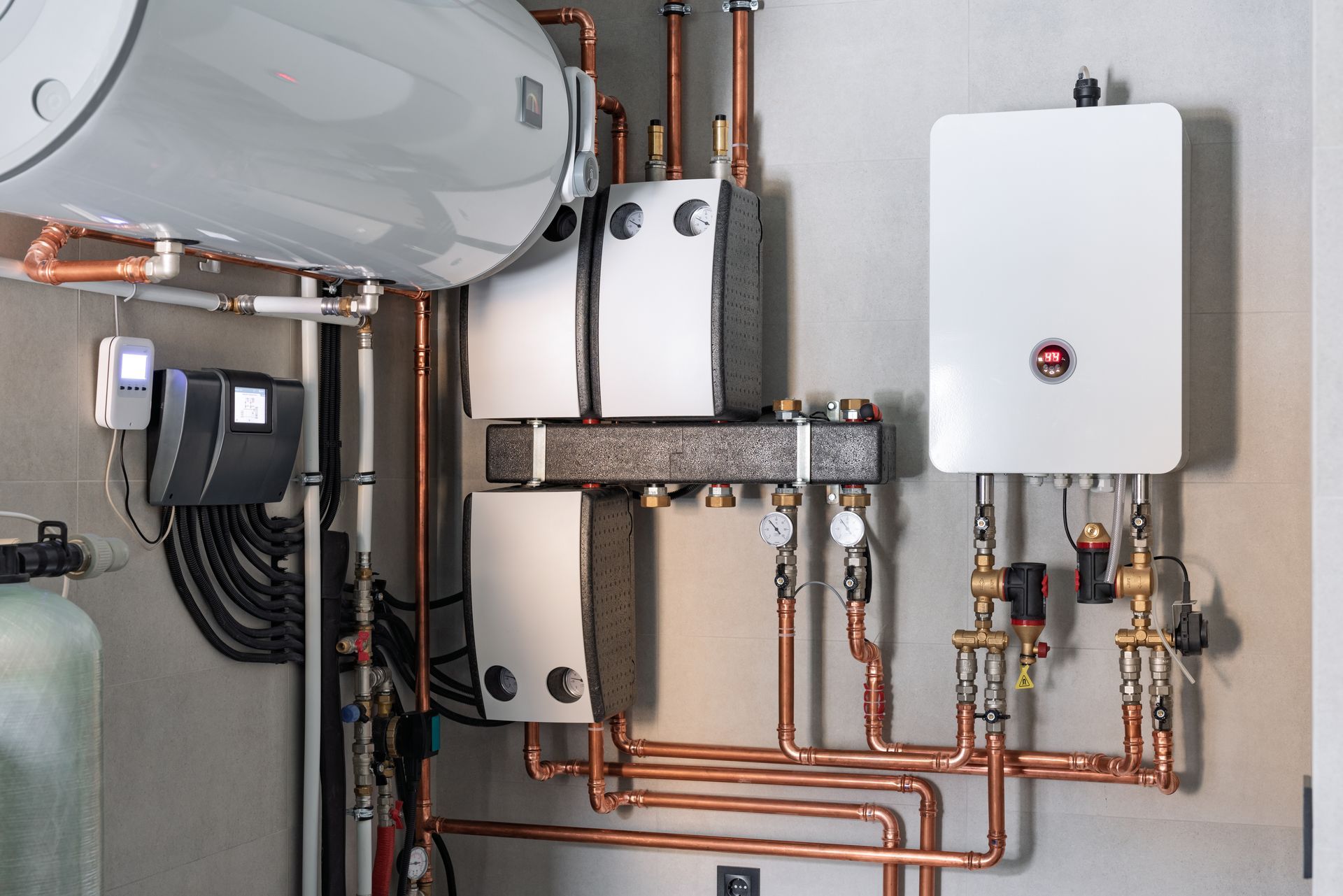
You should also look closely at the base of the unit for any small signs of water dampness or corrosion around the copper fittings. A slow leak drops the overall system pressure, which eventually triggers the low pressure safety switch and locks the boiler out completely. Catching a drop in pressure in September means a simple valve adjustment or tight fitting solves the issue before you need constant heat.
→ From a professional standpoint: Modern condensing boilers require a precise operating pressure between twelve and fifteen PSI to run safely and efficiently without overheating.
Frequently Asked Questions
Why is my high-efficiency combi boiler making a banging noise?
A banging noise usually indicates that minerals or heavy iron oxide sludge have accumulated inside your primary heat exchanger. This creates hot spots where water flashes into steam instantly, creating localized pressure spikes that sound like physical knocking. This issue requires a professional chemical flush to clear out the mineral blockage before the metal cracks from thermal stress.
Does a whistling boiler mean a heat exchanger failure?
Whistling can indicate either a restricted water flow caused by sludge buildup or an internal circulation pump that is operating with worn out internal bearings. When water cannot flow at the correct speed through the tight internal chambers, it creates friction noises and causes temperature imbalances. Replacing a pump early prevents total system lockouts and avoids more complex boiler repair services later.
How much does emergency combi boiler repair cost in Ontario?
Emergency after hours service calls always carry a premium rate compared to scheduled preventative maintenance appointments during regular business hours. The total cost depends entirely on which internal components failed, with major parts like heat exchangers or gas valves being significantly more expensive than simple sensors. Booking a diagnostic check in the early autumn is the most cost effective way to keep your budget predictable.
Securing Warmth Before the Cold Snaps
Taking action on unusual boiler noises before the hard winter freeze arrives keeps your home comfortable and your heating costs manageable. A quick, expert evaluation will pinpoint exactly whether your system needs a minor adjustment or a deep system flush. Get in touch with our team today to schedule your autumn heating inspection and secure total peace of mind for the months ahead.
Share This Blog